
Hair Loss Causes: 8 Common Triggers and How to Respond
By: Physicians Preference RX
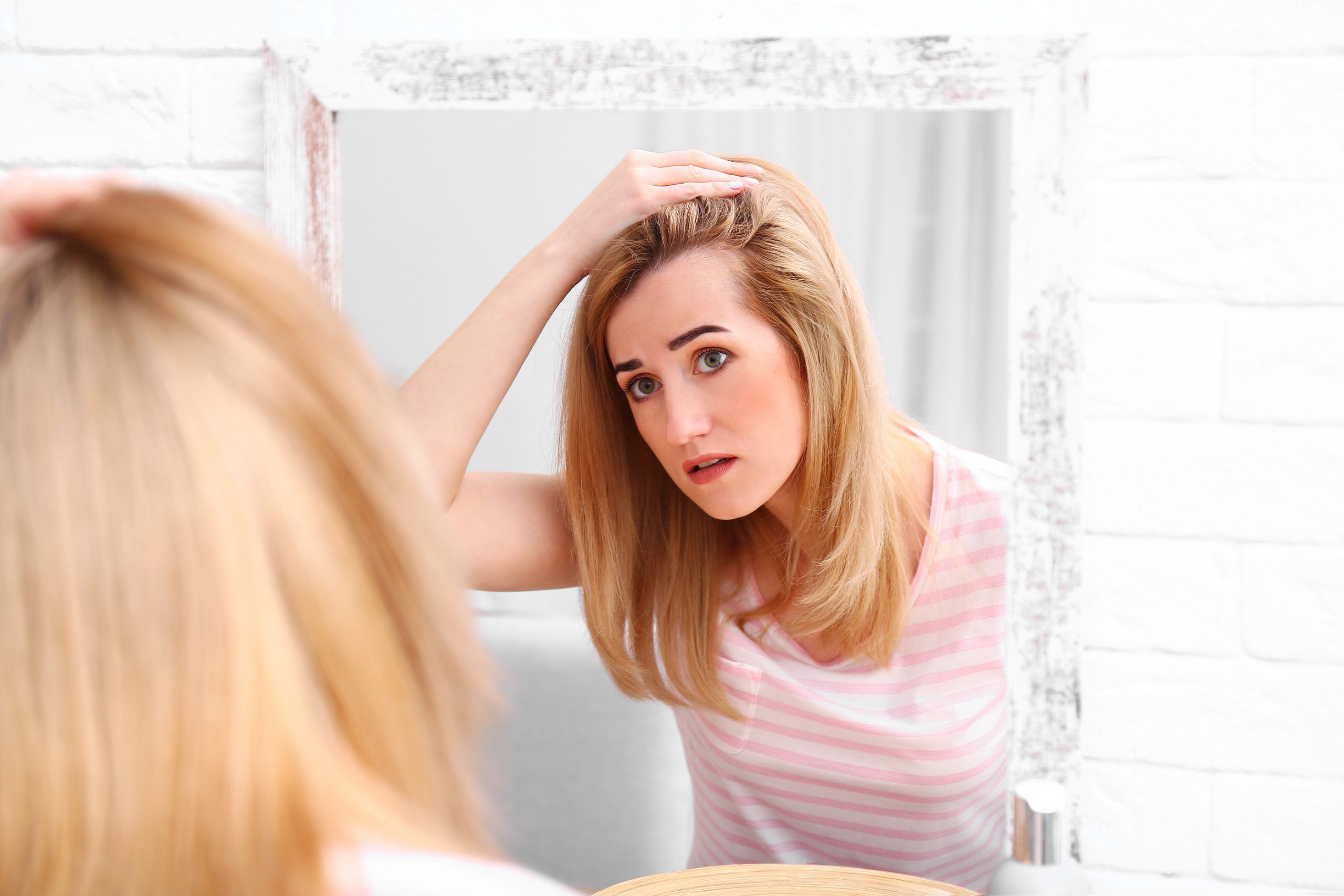
You first notice it in the shower drain. Then it shows up on your brush, your pillow, and the shoulders of your favorite sweater. Maybe your part looks a little wider in photos, or your ponytail feels thinner in your hand.
Everyone loses some hair every day, and dermatologists consider 50 to 100 strands a day normal.¹ Trouble starts when you lose more than that or new hair stops filling in.
The good news? Hair loss usually has a reason. Once you know the most common causes of hair loss, you and your provider can start looking for yours.
How Hair Grows: Where Hair Loss Causes Begin
Think of your scalp like a garden, where every plant blooms on its own schedule. Each hair moves through four stages:²
| Stage | What’s Happening | How Long It Lasts |
| Growing (anagen) | The hair is actively growing | 2 to 8 years |
| Pausing (catagen) | Growth stops and the root loosens | About 2 weeks |
| Resting (telogen) | The hair sits still while a new one forms underneath | 2 to 3 months |
| Shedding (exogen) | The new hair pushes the old one out | Ongoing |
On a healthy scalp, most hairs are growing and only about 9% are resting.² That is why normal shedding doesn’t leave thin spots.
Why Hair Loss Can Seem to Come Out of Nowhere
Sometimes a shock to your system sends a large group of hairs into the resting stage all at once. Doctors call this telogen effluvium. Here’s the tricky part: the shedding usually starts about three months after the event that caused it.³
So if your hair started falling out in March, think back to December. Common triggers include:²
- Losing a loved one or going through a hard season
- Surgery, pregnancy, or childbirth
- A bad virus or high fever
- Losing weight quickly or fasting too often
- Physical or emotional trauma
Jot down anything that changed in the three to six months before your shedding began. That timeline gives your provider a head start.
8 Common Hair Loss Causes
Most people have more than one thing going on. Here are the eight causes that come up most often.
1. Hormone Shifts
Hormones act like messengers that tell your hair follicles what to do. One enzyme turns testosterone into a hormone called DHT, and DHT can shrink hair follicles over time.⁴ On the flip side, estrogen and progesterone help hair stay in the growing stage longer.² Progesterone also slows the making of DHT right at the follicle.⁴
That helps explain why so many women notice thinning after having a baby or around menopause, when these hormones drop.²
2. Thyroid Problems
Your thyroid sets the pace for much of your body, and your hair follicles listen closely. In lab research, thyroid hormones helped hair-building cells grow and kept hair in the growing stage longer.⁵ When your thyroid runs too slow or too fast, growth can stall or shedding can start.² If you’re losing hair, ask your provider about checking thyroxine (T4) along with TSH.²
3. Ongoing Stress
Stress affects more than your mood. In a Harvard study in mice, the stress hormone corticosterone, the mouse version of cortisol, kept hair stuck in the resting stage.⁶ When researchers turned back on a growth signal that stress had shut off, the hair started growing again.⁶
Stress can throw off your cortisol rhythm, too. Normally, cortisol peaks soon after you wake up and drops off by bedtime. When your stress system gets out of balance, that pattern can flatten.² High cortisol also breaks down compounds that help hair keep growing. In fact, researchers have found higher cortisol levels in people with pattern hair loss.²
4. Missing Nutrients
Hair follicles divide quickly, so they need a steady supply of nutrients. Iron, zinc, vitamin D, and B vitamins all play a part.⁷ That said, supplements tend to help most when you actually have a deficiency.⁷ A simple blood test can show where you stand. Omega-3s may help, too. In one trial, women who took omega-3 and omega-6 fatty acids with antioxidants for six months had fewer resting hairs.²
Protein is another big one. Hair is made mostly of protein, and the newest federal Dietary Guidelines suggest 1.2 to 1.6 grams of protein per kilogram of body weight each day.⁸ For a 150-pound person, that’s about 82 to 109 grams. Collagen can also supply building blocks and strengthen the scalp where your hair takes root.
Losing weight quickly can also trigger shedding. A 2026 study linked GLP-1 weight-loss medications with more hair loss, and the researchers who led it pointed to fast weight loss and nutrition changes as possible reasons.⁹ If you take one of these medications, ask your prescriber about your dose, your protein intake, and nutrient testing.
5. Your Genes
Male or female pattern hair loss, also called androgenetic alopecia, runs in families. It happens when follicles are extra sensitive to DHT.² Over time, those follicles shrink and grow thinner, shorter hairs.² Men usually notice it at the temples and crown. Women tend to see a wider part.
6. Shedding After COVID-19
Did your hair start falling out a few months after you had COVID-19? You’re far from alone. In one study, 73.3% of people said they lost more hair after their infection.³ This kind of shedding can last up to six months, so keep tracking it with your provider.³
7. An Overactive Immune System
Your hair follicles normally have a kind of VIP status that keeps your immune system from bothering them.¹⁰ With alopecia areata, that protection breaks down, and your immune system starts attacking healthy follicles.¹⁰ This often causes round, coin-sized bald patches. Because this type of hair loss doesn’t scar, the follicle usually survives, which means regrowth is possible.² Even so, results vary from person to person, and some people do not regrow their hair, especially after widespread or long-lasting loss.
8. Inflammation
Inflammation around a follicle can push it out of the growing stage too soon.² Scalp samples from people with pattern hair loss often show inflammation around the follicles.² That’s why many compounded hair formulas aim to calm inflammation and boost blood flow to the scalp.
Compounded Options That Address Hair Loss Causes
Once you and your provider know what’s behind your hair loss, a compounded prescription can be part of the plan. Physicians Preference Pharmacy makes both topical and oral options. Each one needs a prescription from a licensed provider.
Hair Support Solution
Our pharmacists first created this topical solution to help people who lost hair after COVID-19. Today, prescribers also use it for men and women with pattern hair loss. Depending on the version, it may contain:
- Progesterone, which slows DHT production right at the follicle⁴
- Sirolimus, which helps calm inflammation
You apply it with a dropper directly to thinning areas. We mix it in a scalp-friendly base, and an unscented version is available.
Hair Max Solution
Hair Max is our most comprehensive topical formula. It combines nine ingredients, and each one tackles a different piece of the puzzle:
| Ingredient | What It’s There to Do |
| Minoxidil | Keep hair in the growing stage longer |
| Diclofenac sodium | Calm inflammation around follicles |
| Melatonin | Protect follicles from cell damage |
| Biotin | Support hair building when biotin runs low |
| Ginkgo biloba | Support blood flow in tiny vessels |
| Rosemary oil | May offer antioxidant and anti-inflammatory support |
| Azelaic acid | Block the enzyme that makes DHT |
| Caffeine | Wake up follicles and counter some effects of testosterone |
| Saw palmetto | Block DHT production and calm inflammation |
Some of these ingredients have also been tested on their own. For example, people who applied rosemary oil to their scalp for six months gained about as much hair as people who used 2% minoxidil, a well-known hair loss treatment. In other studies, melatonin applied to the scalp increased hair count.²
Oral Capsules
Prefer a pill? Our oral formulas use these ingredients alone or together:
| Ingredient | What It Does |
| Dutasteride | Blocks both forms of the enzyme that makes DHT¹¹ |
| Finasteride | Blocks mainly one form of that enzyme¹¹ |
| Minoxidil | Supports the growing stage and thicker hair² |
| Biotin | Supports normal metabolism, especially if you’re low² |
In a large trial, dutasteride led to higher hair counts than finasteride after 24 weeks.¹¹
Topical or Oral? How to Choose
The best formula is the one you’ll actually use. Ask yourself:
- What does my morning look like? A capsule takes seconds. A topical takes a few extra minutes before styling.
- Will I finish it in time? Compounded products have a beyond-use date, which works like an expiration date. Your provider can pick an amount you’ll use up before then.
- Do I travel a lot? Think about refills and flying with liquids.
- How many pills do I already take? If your pill count is high, a topical may feel easier.
- Am I comfortable with the side effects? Oral finasteride and dutasteride can affect sexual function. A review of 15 trials found a 1.57 times higher risk with these medicines.¹² Oral minoxidil can also cause hair growth in additional places beyond where you’re intending it to grow.¹³
One last thing: hair takes time. Keep using your treatment until you and your provider have found and addressed the root cause.
Why Quality Matters
Not all compounding pharmacies are the same. Here’s what you can count on from us:
- Accredited quality: We are PCAB accredited and test weight and potency on-site and through a third-party lab.
- Verified ingredients: We get a certificate of analysis for every ingredient.
- Nothing extra: Our formulas contain no unnecessary dyes, binders, fillers, artificial sweeteners, lactose, or parabens.
- Quick turnaround: We complete most prescriptions in 24 to 48 hours and ship to 49 states.
- Real people to talk to: Our pharmacists work with you and your provider every step of the way.
Talk With a Pharmacist About Hair Loss Causes
You don’t have to figure this out alone. Start with your provider, and bring your timeline, your questions, and any recent lab work. Then ask whether a compounded topical or oral option could fit your plan. Have questions? Call Physicians Preference Pharmacy at 281-828-9088. Our pharmacists are always happy to help.
References
- American Academy of Dermatology Association. “Do You Have Hair Loss or Hair Shedding?” AAD.org, www.aad.org/public/diseases/hair-loss/insider/shedding. Annotation: Dermatologist-written patient guide defining normal daily shedding as 50 to 100 hairs.
- Natarelli, Nicole, et al. “Integrative and Mechanistic Approach to the Hair Growth Cycle and Hair Loss.” Journal of Clinical Medicine, vol. 12, no. 3, 2023, article 893, doi:10.3390/jcm12030893. Annotation: Review of hair cycle phases and the hormonal, stress, nutritional, inflammatory, and topical factors that affect hair growth.
- Aldahish, A., et al. “Telogen Effluvium and COVID-19: A Cross-Sectional Study.” European Review for Medical and Pharmacological Sciences, 2023, PMID 37667959. Annotation: Survey describing telogen effluvium timing and increased hair loss in 73.3% of adults after COVID-19.
- Grymowicz, Monika, et al. “Hormonal Effects on Hair Follicles.” International Journal of Molecular Sciences, vol. 21, no. 15, 2020, article 5342, doi:10.3390/ijms21155342. Annotation: Review of how androgens, DHT, estradiol, and progesterone influence the hair follicle.
- van Beek, Nina, et al. “Thyroid Hormones Directly Alter Human Hair Follicle Functions: Anagen Prolongation and Stimulation of Both Hair Matrix Keratinocyte Proliferation and Hair Pigmentation.” Journal of Clinical Endocrinology and Metabolism, vol. 93, no. 11, 2008, pp. 4381-4388, doi:10.1210/jc.2008-0283. Annotation: Lab study showing thyroid hormones act directly on human scalp follicles and prolong the growth phase.
- Choi, Sekyu, et al. “Corticosterone Inhibits GAS6 to Govern Hair Follicle Stem-Cell Quiescence.” Nature, vol. 592, no. 7854, 2021, pp. 428-432, doi:10.1038/s41586-021-03417-2. Annotation: Mouse study showing chronic stress hormones keep follicles in an extended resting phase.
- Almohanna, Hind M., et al. “The Role of Vitamins and Minerals in Hair Loss: A Review.” Dermatology and Therapy, vol. 9, no. 1, 2019, pp. 51-70, doi:10.1007/s13555-018-0278-6. Annotation: Review of vitamins and minerals in non-scarring hair loss and when supplementation appears useful.
- U.S. Department of Agriculture and U.S. Department of Health and Human Services. Dietary Guidelines for Americans, 2025-2030. 2026, realfood.gov. Annotation: Federal nutrition guidance setting a daily protein goal of 1.2 to 1.6 grams per kilogram of body weight.
- Vidal, S. I., et al. “Increased Incidence and Risk of Hair Loss with GLP-1 Receptor Agonists: A Real-World Multicenter TriNetX Cohort Study.” JAAD International, 2026. Annotation: Large cohort study linking GLP-1 receptor agonist use with higher rates of telogen effluvium and pattern hair loss.
- Bertolini, Marta, et al. “Hair Follicle Immune Privilege and Its Collapse in Alopecia Areata.” Experimental Dermatology, vol. 29, no. 8, 2020, pp. 703-725, doi:10.1111/exd.14155. Annotation: Review explaining how loss of follicle immune privilege underlies alopecia areata.
- Gubelin Harcha, Walter, et al. “A Randomized, Active- and Placebo-Controlled Study of the Efficacy and Safety of Different Doses of Dutasteride versus Placebo and Finasteride in the Treatment of Male Subjects with Androgenetic Alopecia.” Journal of the American Academy of Dermatology, vol. 70, no. 3, 2014, pp. 489-498.e3, doi:10.1016/j.jaad.2013.10.049. Annotation: Phase III trial comparing dutasteride with finasteride and placebo in men with pattern hair loss.
- Lee, Solam, et al. “Adverse Sexual Effects of Treatment with Finasteride or Dutasteride for Male Androgenetic Alopecia: A Systematic Review and Meta-Analysis.” Acta Dermato-Venereologica, vol. 99, no. 1, 2019, pp. 12-17, doi:10.2340/00015555-3035. Annotation: Meta-analysis of 15 randomized trials measuring sexual side effects of 5-alpha reductase inhibitors.
- Sharma, Aditi, et al. “Low-Dose Oral Minoxidil as Treatment for Non-Scarring Alopecia: A Systematic Review.” International Journal of Dermatology, vol. 59, no. 8, 2020, pp. 1013-1019, doi:10.1111/ijd.14933. Annotation: Systematic review identifying unwanted body hair growth as a common side effect of oral minoxidil
Recent Posts
- Hair Loss Causes: 8 Common Triggers and How to Respond
- Beyond Antihistamines: Using Amlexanox for Allergies
- Testosterone Replacement Therapy: 5 Options Explained
- Thyroid Medication Options: T3, T4, and DTE Explained
- Could Your Unexplained Symptoms Be Mast Cell Activation Syndrome (MCAS)?
- Compounded Mebendazole: Could Parasites Be Contributing to Your Persistent Gut Symptoms?
- Compounded DHEA for Hormone Balance, Energy, Mood, Libido, and Vaginal Dryness
- Estrogen, Menopause, and Cognitive Decline: Supporting Brain Health with Bioidentical Hormones
- Pregnenolone: Support for Focus, Memory, and Clarity
- Repurposed Uses for Nitazoxanide: SIBO and Viral Symptoms
Contact Us
Local: 281-828-9088
Toll Free: 877-640-5248
Fax: 281-828-9669
pharmacy@PhysiciansPreferenceRx.com
Location
20214 Braidwood Drive
Suite 140
Katy, Texas 77450
See Map


© Copyright 2026. Physicians Preference Pharmacy. All Rights Reserved.